An electrical supply phase refers to the distribution of alternating current (AC) electricity from the power source to electrical loads. It describes how electrical power is delivered and is a key factor in determining the efficiency, capacity, and type of electrical systems used in residential, commercial, and industrial applications.
The two most common types of electrical supply phases are:
Single-Phase Supply:
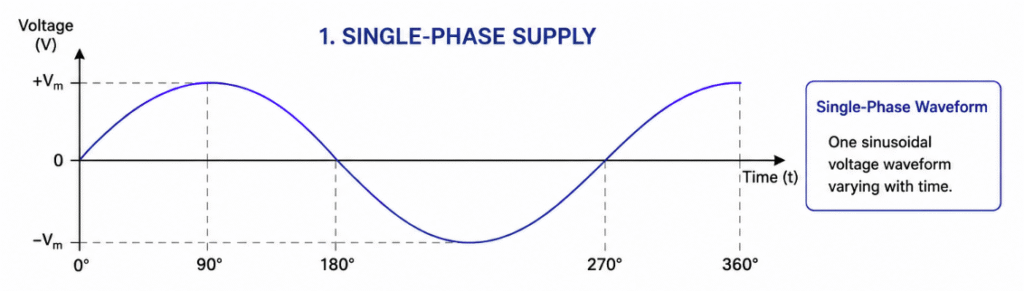
Single-phase power consists of one alternating voltage waveform and is commonly used in homes and small businesses. It is suitable for lighting, fans, televisions, refrigerators, and other household appliances. Single-phase systems are simple, economical, and adequate for low to moderate power requirements.
Three-Phase Supply:
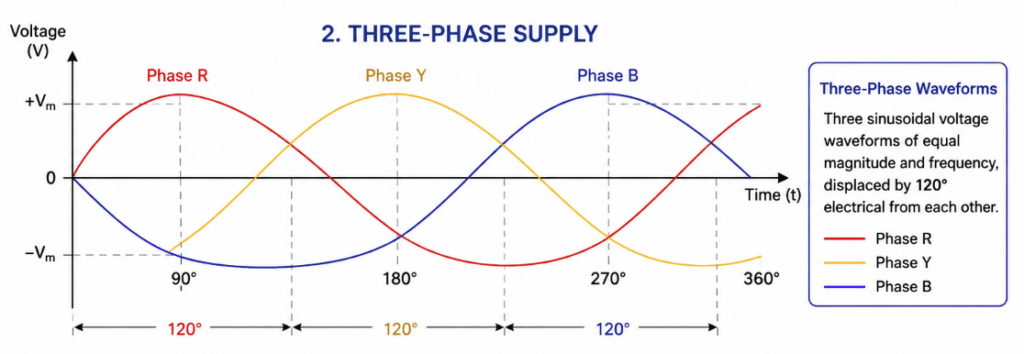
Three-phase power consists of three alternating voltage waveforms, each separated by 120 degrees. This arrangement provides a continuous and balanced power flow, making it ideal for heavy electrical loads such as industrial machinery, motors, pumps, compressors, and large commercial buildings. Three-phase systems offer higher efficiency, greater power capacity, and smoother operation of electrical equipment.
Importance of Electrical Supply Phase
- Ensures efficient transmission and distribution of electrical power.
- Supports the appropriate operation of electrical equipment based on its power requirements.
- Reduces power losses and improves system reliability.
- Enables safe and economical operation of residential, commercial, and industrial electrical installations.
Applications
- Single-Phase: Residential buildings, offices, small shops, and domestic appliances.
- Three-Phase: Factories, manufacturing plants, data centers, commercial complexes, elevators, and large HVAC systems.
Selecting the correct electrical supply phase is essential for ensuring optimal performance, energy efficiency, equipment longevity, and the safe operation of electrical systems.
Leave a Reply