A shorting link and a jumper both connect electrical points together, but they are usually used for different purposes.
| Feature | Shorting Link | Jumper |
|---|---|---|
| Primary purpose | Intentionally short two terminals together | Connect terminals, pins, or circuits to configure or route signals |
| Typical use | CT circuits, test blocks, terminal strips, protection systems | PCBs, terminal blocks, electronic devices, configuration settings |
| Current handling | Often designed to carry higher currents safely | Usually carries signal-level or moderate current |
| Safety considerations | Frequently insulated and designed for safe maintenance operations | Often a simple wire, shunt, or plug without special safety features |
| Removal/Installation | Used during testing, maintenance, or isolation procedures | Used to select modes, addresses, options, or make permanent connections |
Shorting Link
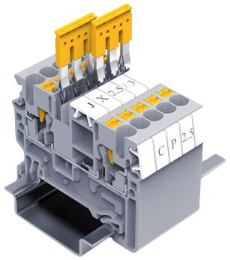
A shorting link is specifically intended to create a low-resistance short circuit between terminals.
Example:
- In a current transformer (CT) circuit, the secondary winding is shorted before disconnecting meters or relays.
- This prevents dangerous voltages from developing across the CT secondary.
Jumper
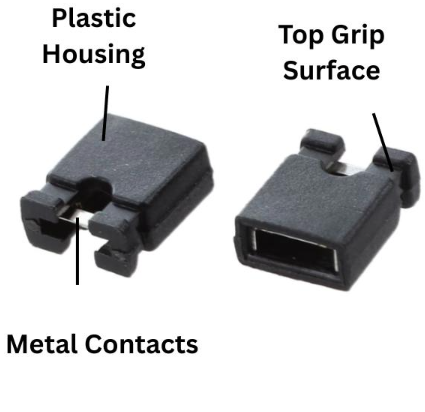
A jumper is a more general connector used to bridge points for configuration or signal routing.
Examples:
- Selecting master/slave settings on older hard drives.
- Configuring electronic circuits on a PCB.
- Connecting adjacent terminals on a terminal block.
Simple way to remember
- Shorting link = safety/maintenance device used to short a circuit.
- Jumper = general-purpose bridge used to connect points for configuration or wiring convenience.
In industrial power and instrumentation systems, the term shorting link is often used when the connection has a safety-critical function (especially with CT circuits), whereas jumper is a broader term for any removable electrical bridge.
Leave a Reply