The traditional electrical grid was designed around a relatively simple concept: large power plants generate electricity, transmission networks move it over long distances, and distribution networks deliver it to homes and businesses.
Today, the electricity system is becoming much more dynamic. Solar panels, battery storage, electric vehicles, smart meters, and other distributed energy resources are changing how electricity is generated, stored, consumed, and managed.
This transformation is leading to the development of smart grids.
A smart grid is an electrical power network that uses digital communication, sensors, automation, and advanced control systems to monitor and manage electricity in real time.
Unlike a conventional grid, which primarily moves electricity in one direction, a smart grid can manage two-way flows of both electricity and information.
A simplified smart-grid structure looks like:
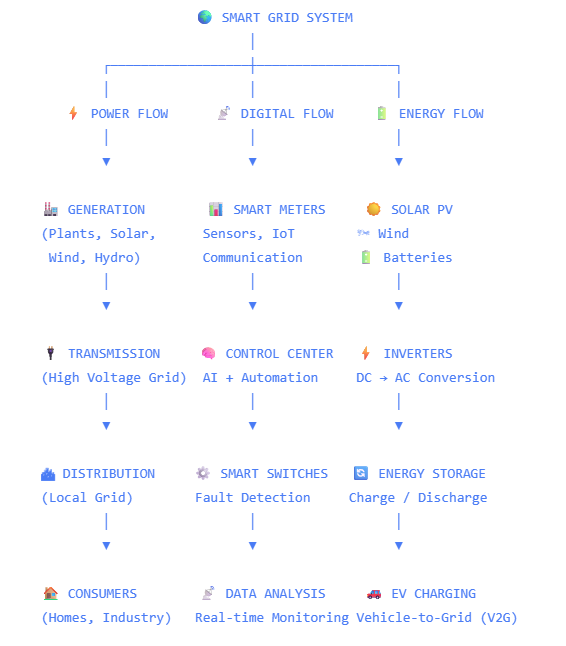
How Does a Smart Grid Work?
Smart grids combine conventional electrical infrastructure with modern digital technologies.
Important components include:
- Smart meters
- Sensors and monitoring equipment
- Automated switches
- Digital communication networks
- Renewable energy systems
- Battery energy storage
- Energy management systems
- Advanced control software
- Electric vehicle charging infrastructure
These technologies allow utilities to identify changes in electricity demand, detect faults, monitor voltage and frequency, and respond to changing conditions much faster.
Smart Grids and Renewable Energy
One of the most important benefits of smart grids is their ability to integrate renewable energy sources such as solar and wind.
Renewable generation can vary depending on weather conditions. For example, solar power changes throughout the day, while wind generation depends on wind speed.
Smart-grid technologies help utilities coordinate renewable generation with electricity demand and energy storage.
A simplified energy flow can be:
Solar PV → Inverter → Smart Grid → Loads
When solar generation is higher than demand, surplus electricity can potentially be stored in batteries or exported to the grid.
Smart Grids and Battery Storage
Battery energy storage is becoming an important part of modern power systems.
Smart-grid controllers can determine when batteries should charge or discharge based on factors such as:
- Electricity demand
- Renewable generation
- Grid conditions
- Peak demand
- Energy prices
- Backup requirements
For example, a battery may charge when solar generation is high and discharge later when electricity demand increases.
This can help reduce peak demand and improve the utilization of renewable energy.
Smart Meters
Smart meters are one of the most visible technologies associated with smart grids.
Traditional electricity meters mainly record energy consumption. Smart meters can provide much more detailed information and can communicate data between the customer and utility.
Depending on the system, smart meters can support:
- More frequent energy-use measurements
- Remote meter reading
- Faster detection of certain problems
- Time-based electricity tariffs
- Better demand management
- Consumer energy monitoring
This information helps both utilities and consumers understand how electricity is being used.
Faster Fault Detection and Restoration
Traditional grids may require crews to physically inspect parts of the network to locate some faults.
Smart-grid systems can use sensors and automated equipment to identify abnormal conditions much more quickly.
For example:
Fault occurs → Sensor detects abnormal condition → System identifies affected section → Automated switching isolates the fault → Supply is restored where possible
This can reduce outage duration and improve grid reliability.
Smart Grids and Electric Vehicles
The increasing use of electric vehicles is creating new electricity demand.
Smart grids can help coordinate EV charging so that large numbers of vehicles do not all charge at the same time.
For example, charging can be shifted to periods when:
- Electricity demand is lower.
- Renewable generation is available.
- Grid capacity is sufficient.
- Electricity prices are lower.
More advanced systems can also support vehicle-to-grid (V2G) technology, where compatible EV batteries can potentially provide electricity back to the grid when required.
Benefits of Smart Grids
Improved Reliability
Better Renewable Integration
Greater Energy Efficiency
Reduced Peak Demand
Faster Fault Response
Greater Consumer Control
Challenges of Smart Grids
Smart grids also introduce new challenges.
Cybersecurity
Greater connectivity means electrical infrastructure must be protected against cyber threats and unauthorized access.
High Initial Investment
Sensors, communication networks, smart meters, automation systems, and advanced control equipment require significant investment.
Data Management
Smart grids generate large amounts of information that must be collected, processed, secured, and analyzed.
Compatibility
Different equipment and communication technologies need to work together reliably across the power network.
Consumer Adoption
Some smart-grid technologies require consumers to change how they generate, store, or consume electricity.
Leave a Reply