Open circuits and short circuits are two common electrical faults found in wiring, control panels, machines, and industrial electrical systems. Understanding the difference helps technicians identify problems quickly and avoid equipment damage.
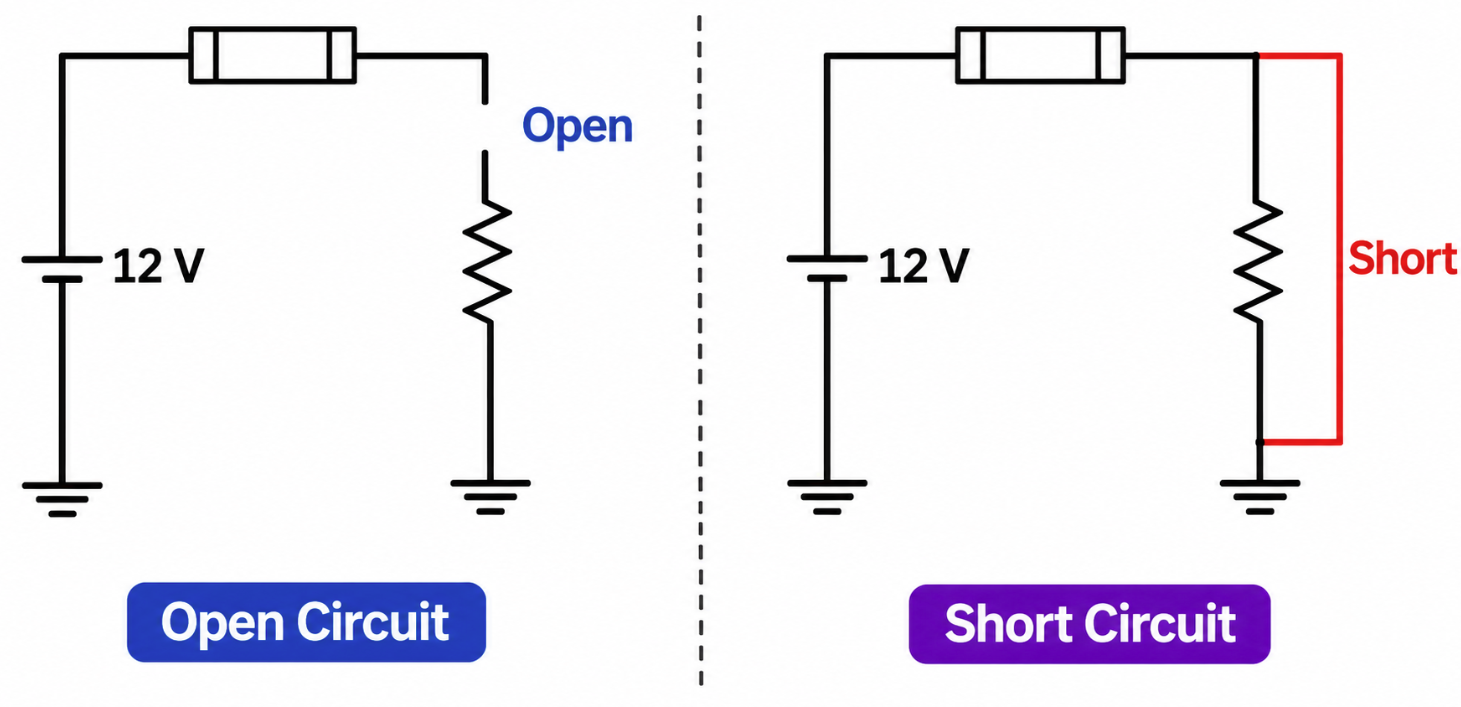
1. What Is an Open Circuit?
An open circuit occurs when the electrical path is broken or disconnected. Because the circuit is incomplete, current cannot flow.
Common causes:
- Broken or disconnected wires
- Blown fuses
- Loose terminal connections
- Damaged switches
- Faulty components
How to identify it:
With the power switched OFF, use a multimeter in continuity or resistance mode to check the circuit. An open circuit normally shows OL (Over Limit) or infinite resistance.
2. What Is a Short Circuit?
A short circuit occurs when current gets an unintended low-resistance path between two points. This can cause excessive current flow, overheating, and damage.
Common causes:
- Damaged wire insulation
- Incorrect wiring connections
- Contact between live and neutral conductors
- Internal component failure
- Moisture or conductive contamination
How to identify it:
With the power isolated, check the suspected circuit using a multimeter in resistance mode. A reading close to 0 Ω may indicate a short, depending on the circuit and measurement points.
3. Open Circuit vs Short Circuit
| Feature | Open Circuit | Short Circuit |
|---|---|---|
| Circuit condition | Broken path | Unintended low-resistance path |
| Current flow | No current through the open path | Excessive current may flow |
| Resistance | Very high / OL | Very low |
| Common symptom | Equipment does not operate | Fuse blows or protection trips |
| Possible cause | Broken wire | Damaged insulation |
4. How to Find Faults Quickly Using a Multimeter
- Switch OFF and isolate the power supply.
- Verify that the circuit is de-energized using an appropriate voltage tester.
- Select continuity or resistance mode.
- Check wires, fuses, switches, and components.
- OL generally indicates an open path.
- A reading close to 0 Ω may indicate continuity or a short, depending on where you measure.
- Compare readings with the circuit diagram and component specifications.
Leave a Reply