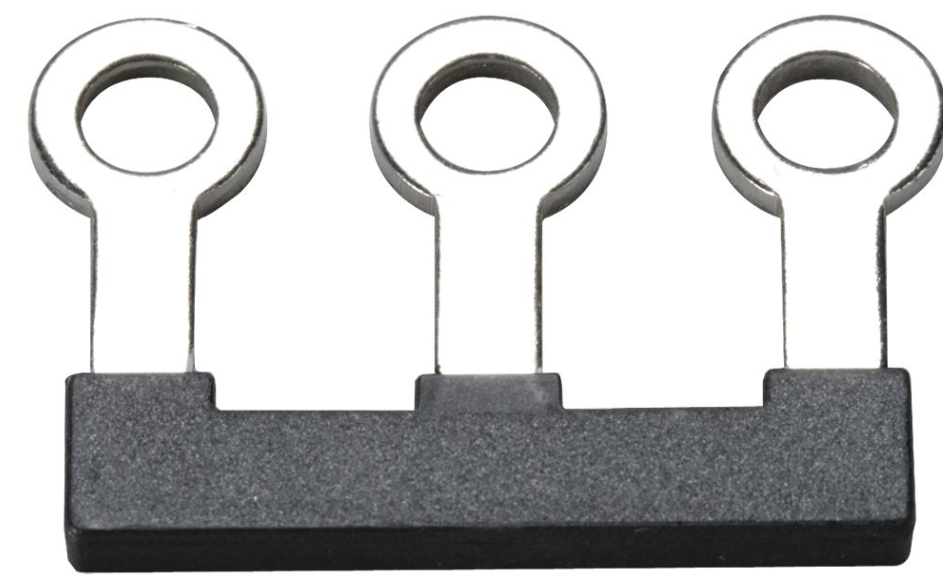
An insulated external shorting link is an electrical connector used to temporarily or permanently short (connect together) two terminals or conductors while keeping the conductive part covered with insulation for safety.
It’s commonly used in:
- electrical panels
- terminal blocks
- instrumentation systems
- CT (current transformer) circuits
- telecom and industrial control systems
What it does
A “shorting link” electrically bridges two points so current or signals can pass directly between them.
The insulated part means:
- the metal bridge is covered or shielded
- users are protected from accidental contact
- risk of short circuits to nearby components is reduced
The external part usually means:
- the link is mounted outside the main device or terminal housing
- it can be accessed or removed without opening equipment internals
Common example: Current Transformer (CT) circuits
In CT systems, secondary terminals should never be left open while energized. An insulated shorting link is used to safely short the CT secondary before maintenance.
Without the shorting link:
- dangerous high voltage can develop
- equipment damage or injury may occur
Typical appearance
They are often:
- brass or copper conductive bars
- covered in plastic insulation
- screw-mounted between terminals
Key advantages
- Electrical safety
- Easy maintenance isolation
- Prevents accidental contact
- Reliable temporary bridging
- Reduces arc/short risks
Leave a Reply