A chiller is a cooling system that removes heat from a liquid (typically water) to provide reliable temperature control for buildings and industrial processes. Whether you’re in a comfortable office building or enjoying a cold beverage, chillers likely play a critical role behind the scenes.
How Chillers Work: The Cooling Process
Chillers operate using a refrigeration cycle that transfers heat from one place to another. In simple terms, they absorb heat from water and reject it elsewhere. The cooling process follows these key steps:
- Warm water enters the evaporator from the building or process
- Inside the evaporator, heat transfers from the water to a refrigerant
- The refrigerant evaporates as it absorbs this heat
- The compressor pressurizes the refrigerant gas, raising its temperature
- The hot refrigerant moves to the condenser where it releases heat
- The refrigerant condenses back to liquid form
- An expansion device reduces the refrigerant’s pressure
- The cycle repeats continuously.
This continuous cycle keeps removing heat from your building or equipment, maintaining optimal temperatures.
Key Components of a Chiller System
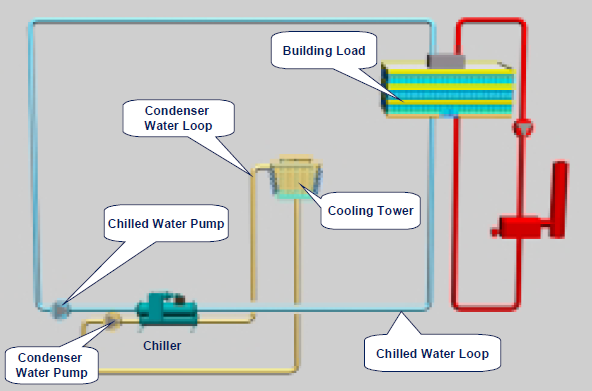
As shown in the diagram, a water-cooled chiller system consists of:
- Chiller Unit: The main cooling equipment containing the refrigeration components
- Chilled Water Pump: Circulates cooled water to the building
- Condenser Water Pump: Moves water between the condenser and cooling tower
- Cooling Tower: Releases heat from the system to the outside air
- Condenser Water Loop: Carries heat away from the chiller
- Chilled Water Loop: Delivers cooled water to air handlers in the building.
Types of Chillers
The chiller can be water-cooled, air-cooled, or evaporatively cooled:
- Water-cooled chillers use cooling towers to reject heat and are more efficient but require water treatment
- Air-cooled chillers reject heat directly to the surrounding air, requiring no water treatment but typically consuming more energy
- Evaporatively cooled chillers combine features of both types
Compressor Types
Chillers use one of four main compressor types:
- Reciprocating compressors: Suitable for smaller systems and peak loads
- Scroll compressors: Efficient for medium-sized applications
- Screw compressors: Can handle high compression ratios efficiently
- Centrifugal compressors: Most efficient at peak loads for larger applications
Leave a Reply